


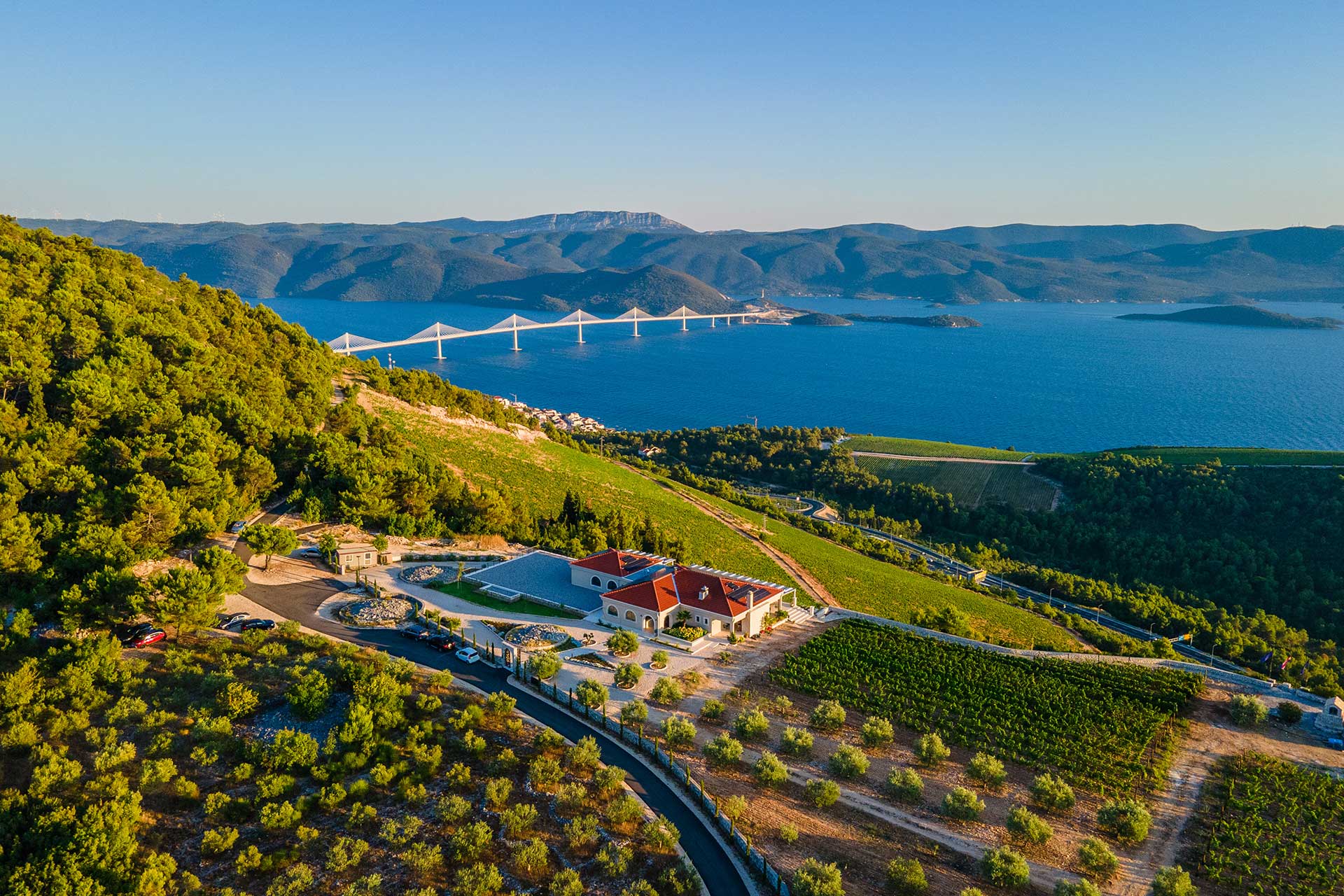
INTRODUCTION: WHERE ANCIENT VINES MEET AN ADRIATIC HORIZON
There are wine regions that produce great bottles, and then there are wine regions that produce a way of life. Dalmatia belongs emphatically to the second category. Stretching along the eastern flank of the Adriatic Sea, this rugged, sun-scorched coastline of southern Croatia is one of the oldest and most storied viticultural landscapes on the planet. The Greeks planted the first vines here over 2,500 years ago, recognizing in the karst limestone cliffs, the amber-drenched light, and the warm coastal winds something elemental and sacred: the perfect conditions to coax extraordinary wine from the earth.
To travel through Dalmatia with a glass in hand is to understand that wine here is not an industry. It is a conversation between the land and the people who have tended it, generation after generation, through empires, wars, and harvests both brutal and magnificent. The region produces wines of stunning individuality, shaped by indigenous grape varieties that exist nowhere else on earth, grown in soils so austere and inhospitable that only the most determined vine can survive, let alone thrive.
At the geographic and spiritual heart of all this lies the Pelješac Peninsula, a slender, mountainous finger of land that juts defiantly into the Adriatic between Split and Dubrovnik. This is no gentle, pastoral wine country. Pelješac is dramatic, almost violent in its beauty: vertiginous limestone cliffs plunging into a cobalt sea, vineyards clinging to forty-five-degree inclines at angles that defy both gravity and agricultural logic, and a sun that hammers the hillsides with an intensity seldom encountered anywhere in the winemaking world.
This is where Plavac Mali, Croatia’s great indigenous red grape, finds its highest and most compelling expression. This is where the appellations of Dingač and Postup were born, where winemakers have been stubbornly, passionately coaxing some of Eastern Europe’s most profound red wines from a landscape of stone and salt for centuries. And this is where a new generation of visionary producers is placing the Balkans firmly on the global fine wine map.
Welcome to the definitive guide to Dalmatian wine. Pour yourself a glass and take a seat facing the sea.
THE TERROIR AND IDENTITY OF THE DALMATIAN WINE REGION. A MACRO VIEW OF DALMATIAN WINE GEOGRAPHY
Dalmatia is not a single, uniform wine country. It is a mosaic of micro-territories, island ecosystems, and distinct coastal subregions, each shaped by its own geological history and climatic personality. For the purposes of understanding its wines, Dalmatia is broadly divided into three zones: Northern Dalmatia, Central Dalmatia, and Southern Dalmatia.
Northern Dalmatia, centered around the city of Zadar and the island of Šibenik, is the coolest and most maritime of the three zones. Its vineyards produce lighter, more aromatic whites from indigenous grapes such as Maraština and Debit, as well as robust reds from Babić, particularly in the Primošten area where ancient, un-grafted vines grow in granitic soils directly by the sea.
Central Dalmatia, orbiting the cultural hub of Split and encompassing the islands of Hvar, Brač, and Vis, is perhaps the most widely celebrated zone in international wine circles. Hvar, in particular, has achieved significant recognition for its Plavac Mali, as well as for its aromatic, mineral whites from Bogdanuša. The island’s protected position within the Adriatic archipelago creates a uniquely benign microclimate where sunshine hours are among the highest recorded in all of Europe.
Southern Dalmatia is the most intensely concentrated zone for premium quality viticulture, and it is here that the Pelješac Peninsula rises to absolute dominance. The subregion of Komarna, on the mainland facing the Pelješac coastline, is also emerging as a producer of notable Plavac Mali, taking advantage of steep south-facing slopes and reflected heat from the water below.
THE CLIMATE: HEAT, WIND, AND THE UNFORGIVING SUN
The Dalmatian climate is classified as a warm Mediterranean type, but this description, while technically accurate, fails to capture the elemental intensity of what actually occurs in the vineyards. Summer temperatures regularly exceed 35 degrees Celsius, and the growing season is long, hot, and characterized by dryness that would stress most vinifera varieties beyond recovery. What saves the vines, and ultimately what makes Dalmatian wines so compelling, is the interplay of this extreme heat with two powerful moderating forces.
The first is the Bura, a fierce, cold, dry northeastern wind that howls down from the Dinaric Alps and roars across the Adriatic with stunning velocity. The Bura is simultaneously destroyer and savior: it strips the humidity from vine canopies, dramatically reducing the risk of fungal disease in these dense, coastal vineyards, and it drops night-time temperatures in the growing season, providing the thermal diurnal variation that preserves acidity and aromatic complexity in the grape skins. Without the Bura, Dalmatian wines would likely be one-dimensional, overripe, and alcoholically bloated. With it, they retain a brightness and a tension that elevates them well above their latitude and climate zone.
The second moderating force is the Maestral, a gentler, warm southwesterly sea breeze that softens the midday heat and circulates cooling air through the vine rows during the hottest afternoon hours.
THE SOILS: KARST LIMESTONE AND ITS GIFTS TO THE VINE
The geological foundation of Dalmatian viticulture is karst limestone, and it is impossible to overstate the degree to which this rock defines the character of every wine made here. Karst is a porous, calcium-rich sedimentary rock that has been fractured and dissolved over millennia of weathering into a landscape of caves, sinkholes, and rocky outcroppings. It provides almost no nutritional richness to the vine. The topsoil layer, where it exists at all, is rarely more than a few centimeters of reddish-brown clay mixed with crushed stone. Vines must send their root systems deep into fissures within the rock itself to find both water and the trace minerals that give Dalmatian wines their characteristic minerality.
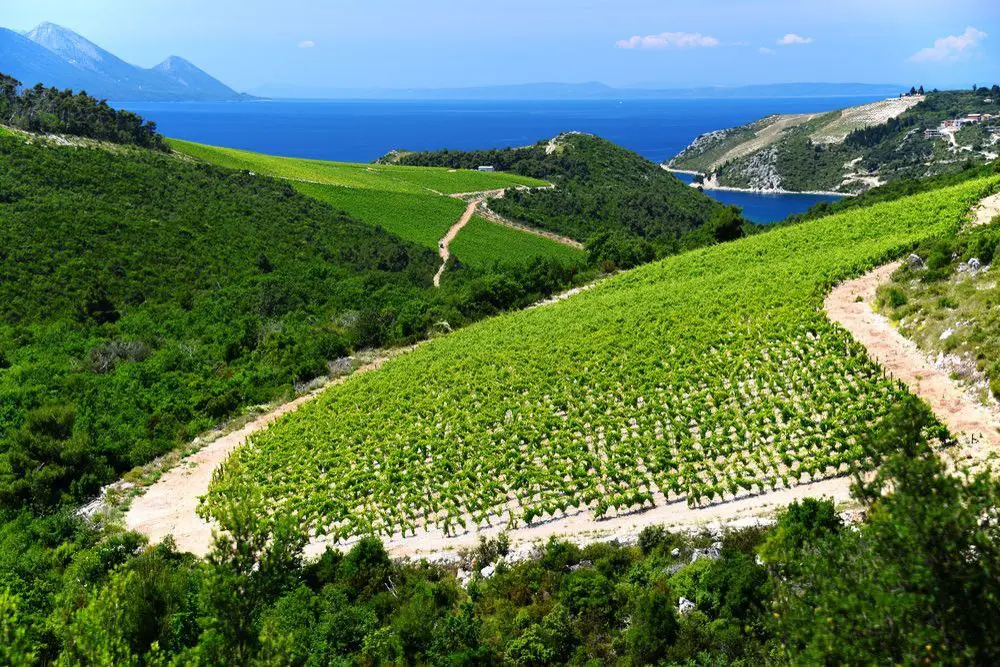
This deliberate stress is the secret weapon of the region. Vines that struggle produce smaller berries with thicker skins, higher phenolic concentration, and more intensely flavored pulp. The resulting wines carry a stony, almost salty quality, a persistence of limestone minerality that runs through the finish of a great Dingač or Postup like a silver thread.
THE INDIGENOUS VARIETIES: PLAVAC MALI, POŠIP, AND GRK
The varietal identity of Dalmatian wine rests almost entirely on its indigenous grape portfolio, and this is one of the most thrilling aspects of the region for serious wine lovers. In an era of global Cabernet Sauvignon homogenization, Dalmatia remains defiantly itself.
Plavac Mali, whose name translates from Croatian as “little blue one,” is the undisputed king of Dalmatian red wine. A cross between Crljenak Kaštelanski (the variety genetically identical to California’s Zinfandel) and the ancient Dobričić grape from the island of Šolta, Plavac Mali is a small-berried, thick-skinned, deeply pigmented variety that produces wines of extraordinary concentration, tannin structure, and alcoholic power. At its finest, on the steep, sun-hammered slopes of Pelješac, it is capable of reaching alcoholic degrees well above fifteen percent while maintaining a complexity and depth of flavor that rivals some of Europe’s most prestigious red wines.
Consult private agent here! Let us fix the winery visit for you.
Skip the crowded tasting rooms and unlock exclusive access to private cellars hidden along the Adriatic coast. Our local wine experts will craft a bespoke, seamless itinerary tailored entirely to your personal palate.
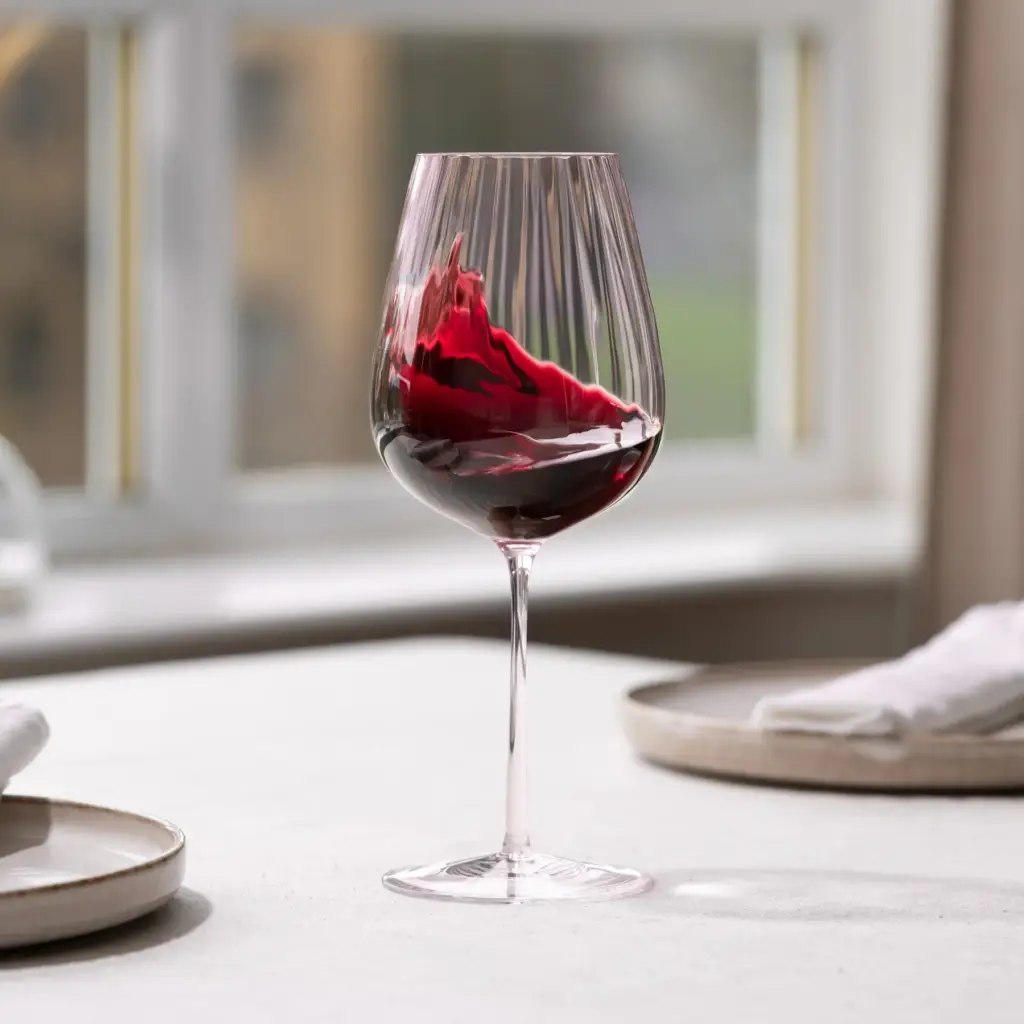
Pošip is the great white grape of Dalmatia, originating from the island of Korčula, directly opposite the western tip of Pelješac. A late-ripening, golden-skinned variety, Pošip produces wines of remarkable textural richness: full-bodied, almost oily in their weight, with flavors of ripe stone fruit, beeswax, wild herbs, and toasted almonds. In skilled hands, it is capable of producing wines of genuine complexity and age-worthiness.
Grk, grown almost exclusively on the island of Korčula in the sandy soils near the village of Lumbarda, is one of viticulture’s genuine curiosities: a variety so biologically unusual that it cannot set its own fruit without the presence of a pollinator variety planted alongside it. The wines it produces are ethereally pale, bone-dry, and electrifyingly mineral, with a saline, almost tidal quality that makes them one of the most distinctive white wines in the entire Mediterranean.
Together, these three varieties form the backbone of a regional identity that is unlike anything else on earth.
DEEP DIVE: THE PELJEŠAC PENINSULA, THE EPICENTER OF PLAVAC MALI. GEOMORPHOLOGY AND THE SHAPE OF A WINE LANDSCAPE
The Pelješac Peninsula stretches 65 kilometers from the salt flats of Ston in the east to the windswept cape of Lovišta in the west, and for its entire length it barely exceeds a few kilometers in width. It is the second largest peninsula in Croatia, yet it feels intimate, even claustrophobic, hemmed in by sea on both sides and dominated by the Zabrada mountain range that forms its spine, peaking at the summit of Sveti Ilija at 961 meters above sea level.
This geomorphology is everything. The mountains create a rain shadow that reduces precipitation on the southwestern, seaward slopes to almost nothing during the summer months. The narrowness of the peninsula means that sea influence is omnipresent: the vine is never more than a few kilometers from the water, and the maritime moderation of temperature is constant. The karst geology, stripped of topsoil by centuries of erosion and relentless wind, exposes the bleached white limestone bedrock that gives Pelješac its characteristic lunar appearance and contributes the stony, mineral spine of its finest wines.
THE PHENOMENON OF TRIPLE INSOLATION
Perhaps no single concept is more important to understanding what makes Pelješac wines unique than the phenomenon of triple insolation, a term that describes the three simultaneous sources of solar radiation that strike the vines on the peninsula’s most celebrated southwestern slopes.
The first source is direct overhead sunlight, which in this part of the Adriatic amounts to approximately 2,800 hours annually, one of the highest sunshine totals recorded anywhere in Croatia and, indeed, in Central and Southern Europe as a whole. The second source is the brilliant reflection of sunlight from the surface of the Adriatic Sea itself. The sea acts as a vast natural mirror, bouncing radiant solar energy back up toward the hillside vineyards from below at angles that augment the overhead radiation significantly. The third source is the reflection from the white karst limestone rocks and pale, dusty soils of the vineyard floor itself, which radiate heat and light upward into the vine canopy from beneath.
The combined effect of these three simultaneous radiation sources creates a thermal environment of extraordinary, almost furnace-like intensity within the best vineyard sites. Grapes ripen with exceptional speed and completeness. Berry skins thicken and deepen in color. Phenolic compounds accumulate to levels that, in any other climate, would be considered extreme but that, on Pelješac, are perfectly balanced by the natural acidity preserved through cool nights and ocean breezes. The result is a grape at harvest that has attained a degree of physiological maturity rarely seen elsewhere in European viticulture.
THE DINGAČ APPELLATION: CROATIA’S FIRST GRAND CRU
Dingač holds a place in Croatian wine history that cannot be overstated. Established in 1961 as the country’s first protected wine region, it occupies a precisely defined stretch of southwestern-facing slope on the Pelješac Peninsula, situated between the small villages of Trstenik and Podobuče. It was the first appellation in the former Yugoslavia to receive formal geographic protection, a recognition that even in the communist-era bureaucracy of socialist Croatia, this particular hillside was producing something categorically different from, and superior to, the wines of the surrounding area.
The defining characteristic of the Dingač vineyard is its gradient. The slopes here average forty-five degrees of incline, a pitch that renders mechanized farming entirely impossible. Every vine in Dingač must be tended by hand: pruning, trellising, canopy management, and, most significantly, harvest are all performed by human labor, often involving workers essentially scaling the hillside on foot, harvesting grapes into baskets strapped to their backs, and carefully descending to the road below without losing their footing on the treacherous, loose stone surface.
In the years before a small, single-lane tunnel was blasted through the mountain in 1973 at the expense of local winemakers, grapes had to be transported over the four-hundred-meter pass on the backs of donkeys. The tunnel, which still operates today as the primary route through which Dingač’s harvest reaches the winery facilities on the other side of the mountain at Potomje, is itself a monument to the sheer, almost irrational commitment of Pelješac winemakers to their impossible landscape.
Dingač wines produced from Plavac Mali grown on these slopes are characterized by their extraordinary density of fruit, their deep garnet-to-ruby color with violet hues in youth, and their sheer alcoholic power, with many examples regularly reaching 14.5 to 16 percent alcohol by volume, and occasional outlier vintages approaching and exceeding 17 percent. Yet despite this power, the finest Dingač wines are not hedonistic fruit bombs in the New World sense. They carry a savory, mineral austerity beneath the dark fruit that speaks unmistakably of their limestone origins: notes of dried figs, carob, dark cherry compote, tobacco, wild sage, Mediterranean herbs, and a persistent saline, stony quality in the finish that is the signature of this unique terroir.
The trees that are slow to grow bear the best fruit.
– Molière
THE POSTUP APPELLATION: ELEGANCE ALONGSIDE POWER
Postup occupies the slopes immediately to the north and east of Dingač, on the upper, inner side of the Zabrada ridge, facing the calmer waters of the Pelješac Channel rather than the open Adriatic. The contrast between the two appellations is instructive. Where Dingač is maximalist and thundering, Postup tends toward greater elegance and aromatic complexity, with slightly lower alcohol levels, a more defined tannin structure, and a fresh acidity that makes its wines perhaps more approachable in youth.
Postup’s soils are similarly karst-based but with slightly deeper topsoil in certain parcels, contributing a richer, more fruit-forward profile to wines that still carry the unmistakable Pelješac minerality. The best Postup wines age beautifully, developing complex tertiary notes of dried tobacco, leather, dark chocolate, and earth over ten to fifteen years in bottle. Like Dingač, Postup is a place of extraordinary viticultural difficulty, where the human cost of each harvest is measured in physical labor of a kind that most modern wine consumers, reaching for their glass in a comfortable restaurant, can scarcely imagine.
THE DEFINITIVE GUIDE TO PELJEŠAC WINERIES
MILOŠ WINERY: THE SOUL OF DINGAČ
If any single producer can claim to embody the authentic, uncompromising soul of Pelješac viticulture, it is the Miloš family winery. Based in the small village of Ponikve, the Miloš estate has been farming the steep Dingač and Postup terraces for generations, and the philosophy that governs every decision in vineyard and cellar remains one of deep, almost philosophical commitment to low-intervention winemaking and respect for the raw material the land provides.
In the Miloš cellar, there are no shortcuts. Fermentation takes place in traditional wooden vessels, and the wines undergo extended maceration periods that allow the thick-skinned Plavac Mali grapes to surrender their full complement of color, tannin, and phenolic complexity to the wine. Aging occurs in large-format old Slavonian oak barrels of the kind that have been used in Dalmatian winemaking for centuries. These vessels impart a subtle oxidative texture and a gentle toasty warmth to the wine without the dominant vanilla and coconut signatures of new oak that can mask the terroir character of lesser-made wines.
The flagship wine from Miloš is the Stagnum, named for the Latin historical designation of Ston, the medieval salt town at the base of the Pelješac Peninsula. Stagnum is a wine of profound individuality and genuine grandeur. In great vintages, it presents with a deep, almost impenetrable garnet color and a nose of breathtaking complexity: dark cherry preserve and black plum at the fore, giving way to layers of sun-dried fig, carob pod, bitter chocolate, smoked game, Mediterranean thyme, dried tobacco, and a deep, stony, saline minerality that seems to carry the very texture of the limestone hillside within it. On the palate, the tannins are robust and grippy in youth but exceptionally fine in their grain, and the finish extends for well over a minute with a warm, savory persistence that is unlike almost anything else available from this part of the world. Stagnum is a wine that demands cellaring, ideally a minimum of five to ten years for the greatest vintages, and rewards patience with the kind of tertiary complexity that only true terroir-driven wines can develop.
KORTA KATARINA: LUXURY, VISION, AND THE AMERICAN-CROATIAN DREAM
Korta Katarina represents perhaps the most glamorous expression of the new Pelješac. Established by American entrepreneur Bob Gitter and his Croatian-born wife Penny in the early 2000s, with the winery and associated luxury property located in Orebić at the western end of the peninsula, Korta Katarina has brought a combination of Californian wine business vision and Croatian native pride to the production of wines that compete confidently on the international luxury market.
The winery facility itself is a benchmark of modern Dalmatian wine architecture: a pristine, state-of-the-art production space with temperature-controlled stainless steel fermentation tanks, gravity-fed wine movement systems that minimize pump stress on the delicate skins of Plavac Mali, and a beautifully appointed tasting room with direct views across the Pelješac Channel to the island of Korčula. The complete luxury estate also includes a boutique hotel and yacht mooring, making it one of the most complete wine tourism experiences in the entire Adriatic region.
The flagship Korta Katarina Plavac Mali is sourced from estate vineyards on Dingač and surrounding Pelješac slopes, and reflects a winemaking philosophy that bridges the Old World traditions of the peninsula with New World precision and cleanliness. The wine is powerful and deeply concentrated, with aromas of ripe black cherry, prune, dried violet, and dark plum, layered with notes of cured meat, Mediterranean rosemary, and a polished, cedary oak integration from its time in French barriques. The tannins are rounded and plush, the finish long and warming. It is a wine of genuine elegance and ambition, designed as much for the sommelier’s list of a high-end Dubrovnik restaurant as for the dinner tables of New York and Chicago.
Their Pošip white, sourced from vineyards on the island of Korčula, is equally impressive: full-bodied and golden, with aromas of white peach, ripe pear, acacia honey, toasted almonds, and wild herbs, supported by a rich, almost creamy palate weight and a long, mineral finish with just a whisper of sea salt on the close.
SAINTS HILLS: MODERN AMBITION AND THE MICHEL ROLLAND CONNECTION
Saints Hills is the winery that perhaps most dramatically announced Pelješac’s arrival on the international stage of premium wine production. Founded by the Mihanović family, the estate operates from a striking, architecturally innovative facility that feels more reminiscent of a Napa Valley boutique than a traditional Dalmatian winery, yet the wines it produces are deeply rooted in the specific terroir of the peninsula.
What has brought Saints Hills into the spotlight of international wine journalism above all else is its ongoing collaboration with the legendary Bordeaux consultant Michel Rolland, arguably the most influential winemaker-consultant in the world, whose imprint on the great estates of Pomerol, Argentina’s Mendoza, and California’s Napa Valley has shaped an entire generation of premium wine production. Rolland’s involvement with Saints Hills signaled something important to the global wine community: a genuine belief that the raw material of Pelješac’s Plavac Mali vineyards was capable of world-class expression under the right guidance.
The flagship wine from Saints Hills is the Dingač Sv. Roko, a wine named for the patron saint of the chapel that overlooks the estate’s primary Dingač vineyard parcels. It is an ambitious, meticulously crafted expression of the appellation, vinified with exacting attention to extraction management and barrel selection. On the nose, Sv. Roko presents layers of concentrated dark cherry, ripe blackberry, espresso, bitter cocoa, pressed violets, and a beautifully integrated smoky, mineral quality that speaks clearly of the Dingač hillside. The palate is opulent and full, the tannins polished by careful oak maturation into something smooth and structured simultaneously, and the finish carries the characteristic warmth and persistence of great Pelješac Plavac Mali with exceptional length and definition.
Saints Hills also produces a notable range of white and rosé wines, demonstrating that the estate’s ambition extends well beyond a single varietal, but it is the Sv. Roko Dingač that defines their reputation and that deserves the attention of any serious collector of Mediterranean fine wine.
MATUŠKO WINERY: THE PATRIARCH OF DINGAČ PROMOTION
No winery in Pelješac’s history has done more to bring the name of Dingač to the attention of the wider world than Matuško. The Matuško family estate, based in Potomje, that small village at the very entrance to the famous tunnel that connects the vineyards on the seaward slope to the road on the northern side of the mountain, has been making wine from the Dingač appellation for generations and was among the earliest and most persistent advocates for the formal recognition and promotion of the appellation both domestically and internationally.
The Matuško cellar is a place of genuine atmospheric depth. Descending into the aging caves beneath the winery, one is surrounded by the cool, damp, mineral-scented air that is the natural environment for the large oak barrels in which their wines undergo their patient, extended maturation. The cellar’s architecture, carved into the limestone hillside itself, maintains a constant temperature and humidity that requires no mechanical intervention, the living rock of Pelješac acting as the most natural and effective barrel-aging environment imaginable.
The Matuško Dingač is a wine of robustly traditional character: dense, extracted, and unapologetically powerful, with a tannic structure built for the long haul and a flavor profile that centers on dark, almost brooding fruit: black cherry syrup, dried blackberries, smoked prunes, and a deep, earthy, tarry quality that develops over time into something magnificent. These are wines that need time, often requiring a decade or more in bottle before their tannic architecture softens enough to allow the full complexity of the fruit and minerality to emerge. But for those with the patience to wait, the reward is some of the most authentic and compelling Dingač available from any producer on the peninsula.
BURA-MRGUDIĆ: THE VOICE OF FAMILY HERITAGE
Among the smaller, family-operated estates that represent the true soul of Pelješac viticulture, Bura-Mrgudić stands out as an estate of genuine character and historical authenticity. Named partly for the powerful Bura wind that defines the climatic personality of the peninsula, this boutique producer farms a small holding of old-vine Plavac Mali parcels on both the Dingač and Postup terraces, maintaining the kind of intimate relationship between family, vine, and vintage that the larger, more commercially visible estates can rarely replicate.
The wines from Bura-Mrgudić are made in small quantities, often sold almost entirely through word of mouth, local restaurants, and direct cellar-door sales. They represent Pelješac at its most unmediated and authentic. The Dingač from this estate is a wine of raw power and directness, with concentrated aromas of dark cherry, dried fig, wild herbs, and the distinctive stony, saline minerality of the Dingač terroir presented without the softening effect of extensive oak treatment. For the wine traveler prepared to venture off the main road and knock on the cellar door, Bura-Mrgudić offers one of the most genuinely rewarding tasting experiences available anywhere on the peninsula.
Similarly, small family producers such as Marlais demonstrate the remarkable diversity of approach and expression that exists within even the tightly defined boundaries of the Dingač appellation. The Marlais estate brings a meticulous attention to individual parcel viticulture, practicing rigorous green harvesting and canopy management to concentrate flavor in what are already inherently low-yielding vines, and aging their wines in a mix of Slavonian and French oak vessels that balances fruit purity with structured development. Their single-vineyard Plavac Mali is fragrant, precise, and hauntingly mineral, demonstrating that even within a tradition defined by power and density, Pelješac is capable of wines of extraordinary finesse.
A SOMMELIER’S GUIDE TO PAIRING AND TASTING PELJEŠAC PLAVAC MALI
Approaching a great Pelješac Plavac Mali requires patience and preparation. These are wines of considerable structure and, in youth, their tannins can be formidably gripping. The single most important service consideration for any serious Dingač or Postup is extended decanting. A young example, within five years of vintage, benefits from a minimum of two to three hours in a wide-based decanter before service. This aeration allows the wine’s dense, somewhat closed aromatic profile to open and expand, releasing the full complexity of fruit, spice, and mineral character that lies beneath the tannic structure. For mature examples with ten or more years of bottle age, careful decanting of one to two hours is still recommended, but with attention paid to any sediment that may have formed, requiring a gentle pour through a fine mesh or decanting candle.
Serving temperature is equally critical. The temptation to serve a full-bodied red wine close to room temperature must be resisted. An ideal serving temperature for Pelješac Plavac Mali is between 16 and 18 degrees Celsius. At higher temperatures, the wine’s considerable alcohol becomes dominant and flabby on the palate, and the aromatics, which include the delicate floral and herbal top notes of sage, wild thyme, and dried violet, become obscured. At the correct temperature, these aromatics sing.
For food pairing, the classic Dalmatian preparation of peka is the definitive match. Peka is a traditional slow-cooking technique in which veal, lamb, octopus, or a combination of meats and vegetables are sealed beneath a heavy iron bell and buried under glowing embers for several hours, the slow, moist heat producing meat of extraordinary tenderness and depth of savory flavor. The rich, gelatinous quality of peka-cooked veal and its herby cooking juices find a perfect partner in the structured tannins and concentrated fruit of Dingač. Aged Paški sir, the celebrated sheep’s milk cheese from the island of Pag, with its crystalline texture and deep, nutty, lanolin-rich flavor, is another pairing of remarkable harmony, the cheese’s salt and fat acting as a perfect foil to the wine’s tannic grip. For dessert, a square of dark chocolate with a cocoa content above seventy percent extends the wine’s aromas of carob and bitter chocolate into the after-dinner course with seamless elegance.
CONCLUSION: A WORLD-CLASS REGION AWAITING ITS GLOBAL MOMENT
There is a great injustice in the contemporary wine world, and it is this: that Pelješac remains on the periphery of the international consciousness while regions of arguably lesser geological drama and varietal uniqueness command the full attention of collectors, critics, and sommeliers. A great Dingač from Miloš or Matuško, or a precision-crafted Plavac Mali from Saints Hills or Korta Katarina, deserves the same seat at the table as a Brunello di Montalcino or a mature Pomerol, not as an imitation of those wines but as a statement of something entirely its own.
Dalmatia has been making wine for twenty-five centuries. Pelješac has been producing some of the most extraordinary red wines in the Mediterranean world for generations. The rest of the world is only now beginning to catch up with what those ancient Greek settlers knew the moment they first pressed their boots into the white karst limestone of this improbable, magnificent coastline.
Pack your bags. Bring an empty cellar and an open heart. The Adriatic sun is waiting.